


Energy Savings from Indoor Air Quality Technology: What Building Owners Should Know
61% of Workers Would Choose Fresher Air Over Better Amenities for a Full Workday
As return-to-office expectations continue to evolve, employees are bringing a sharper sense of awareness into the workplace. After years of having more control over their home environments, many workers are paying closer attention to whether the spaces they are being asked to return to feel comfortable, healthy, and well-managed. In that environment, comfort is no longer a background issue. It has become part of how employees judge whether a workplace feels worth the trip.
To understand how employees judge workplace comfort and indoor air quality in the return-to-office era, GPS Air, a leading provider of indoor air quality (IAQ) solutions, partnered with the third-party survey platform Pollfish on the 2026 GPS Air Indoor Air Quality Report: The Return-to-Office Reality Check, surveying 750 U.S. adults in non-remote work environments in March 2026. Respondents included workers in office, education, healthcare, retail, hospitality, and other public-facing settings.
Key Findings of the 2026 GPS Air Indoor Air Quality Report
- 61% of workers would choose fresher, more comfortable air over better amenities for a full workday.
- 67% say they would be more willing to work in-person if their company communicated the steps it takes to ensure a comfortable and healthy environment.
- 83% say visible efforts to improve workplace comfort and safety would make them feel more respected as an employee.
- 66% say improved ventilation, airflow, or temperature control would help reassure them that their workplace is being actively managed.
- 52% want either weekly updates or always-available visibility into workplace conditions, while another 34% want at least occasional updates.
- 83% say noticeable workplace conditions affect their confidence that leadership is prioritizing a well-managed work environment, including 50% who say the impact is very or extremely influential.
“Employees are looking beyond appearances and paying closer attention to whether a workplace feels comfortable, cared for, and actively managed,” said Audwin Cash, CEO of GPS Air. “Indoor air quality is now part of how they decide whether a workplace is worth returning to. Making those conditions more visible can help employers build trust, reinforce respect, and give employees more confidence coming in.”
Return-to-Office Expectations Have Changed
Employees are bringing different expectations into shared workplaces, and those expectations are rooted in daily experience. When workers first arrive at work, the factors that shape their impression are immediate and sensory: 53% notice temperature and airflow first, 51% notice cleanliness and tidiness, and 45% notice noise levels. These are among the first signals employees use to judge the workplace experience.
That same awareness shapes whether employees feel the workplace is worth the commute. The top factors influencing the decision to spend time working in-person are feeling productive and focused at 51%, accessing resources not available at home at 41%, and seeing people they work with at 39%. Another 35% say feeling comfortable enough to stay all day helps shape that decision.
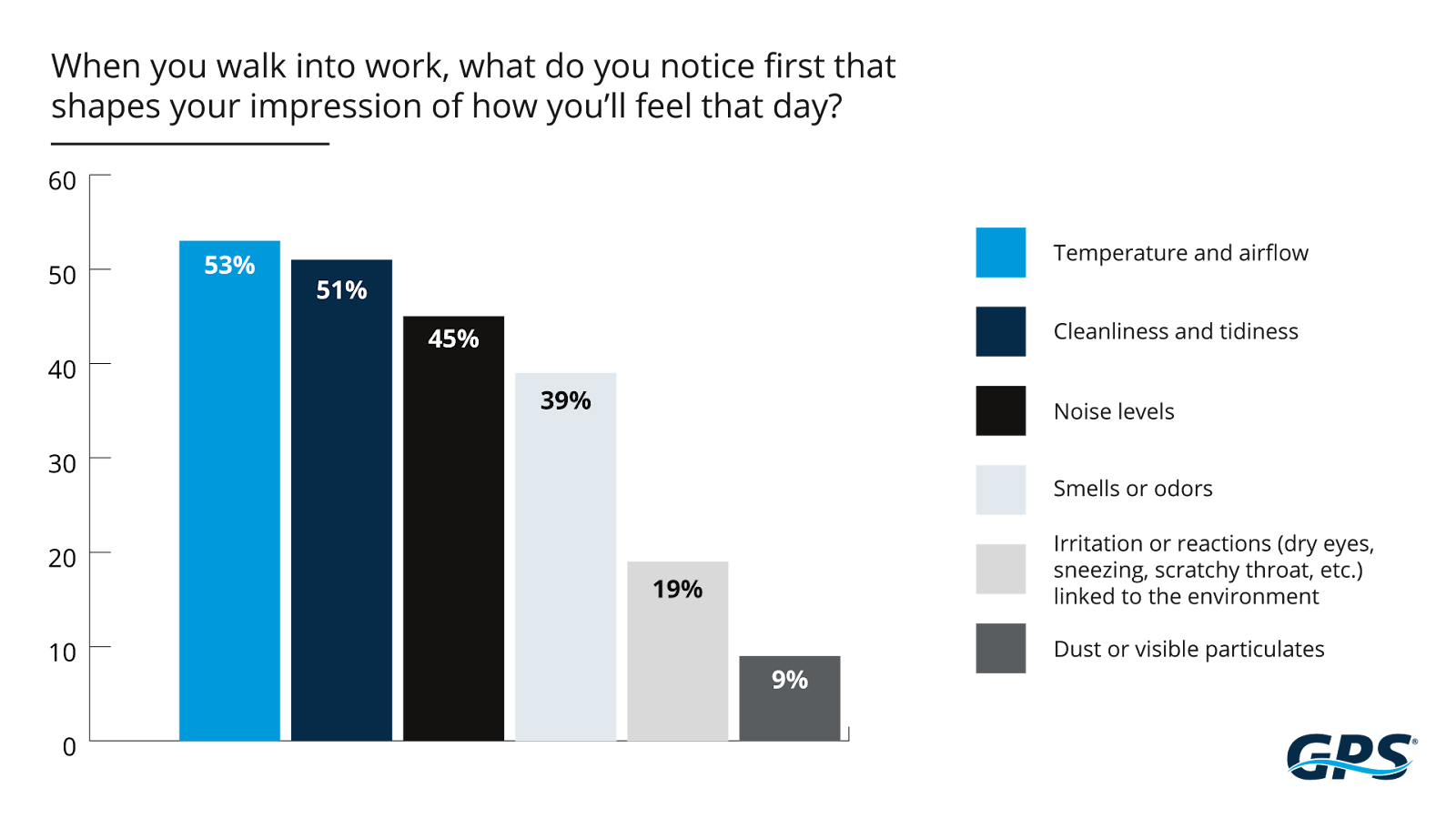
53% say temperature and airflow are the first things they notice when walking into work that shape how they’ll feel that day.
That contrast may feel even sharper among respondents who work in a professional or administrative office. Within that group, those in the office only 1 to 2 days per week were more likely than those there 3 or more days per week to strongly agree they notice differences between home and work that affect comfort and productivity, 51% versus 39%. They were also more likely to say odd smells, dust, or temperature swings often or always make the workplace feel poorly maintained, 43% versus 27%. That pattern suggests employees who split time between home and office may be more sensitive to changes in workplace conditions, while those in the office more often may have grown more accustomed to the environment over time.
Air Quality Matters More Than Perks
Workplace experience is often framed around amenities, design, and flexibility. But employees are making a more basic calculation first: does the environment feel good enough to support a full day of work?
When asked to choose between a workplace with better amenities and one with fresher, more comfortable air, 61% chose the environment with basic amenities and consistently fresh air. The top drivers of productivity tell a similar story: temperature and airflow at 57% and noise levels at 55% are the strongest drivers of productivity, followed by cleanliness and tidiness at 47%.
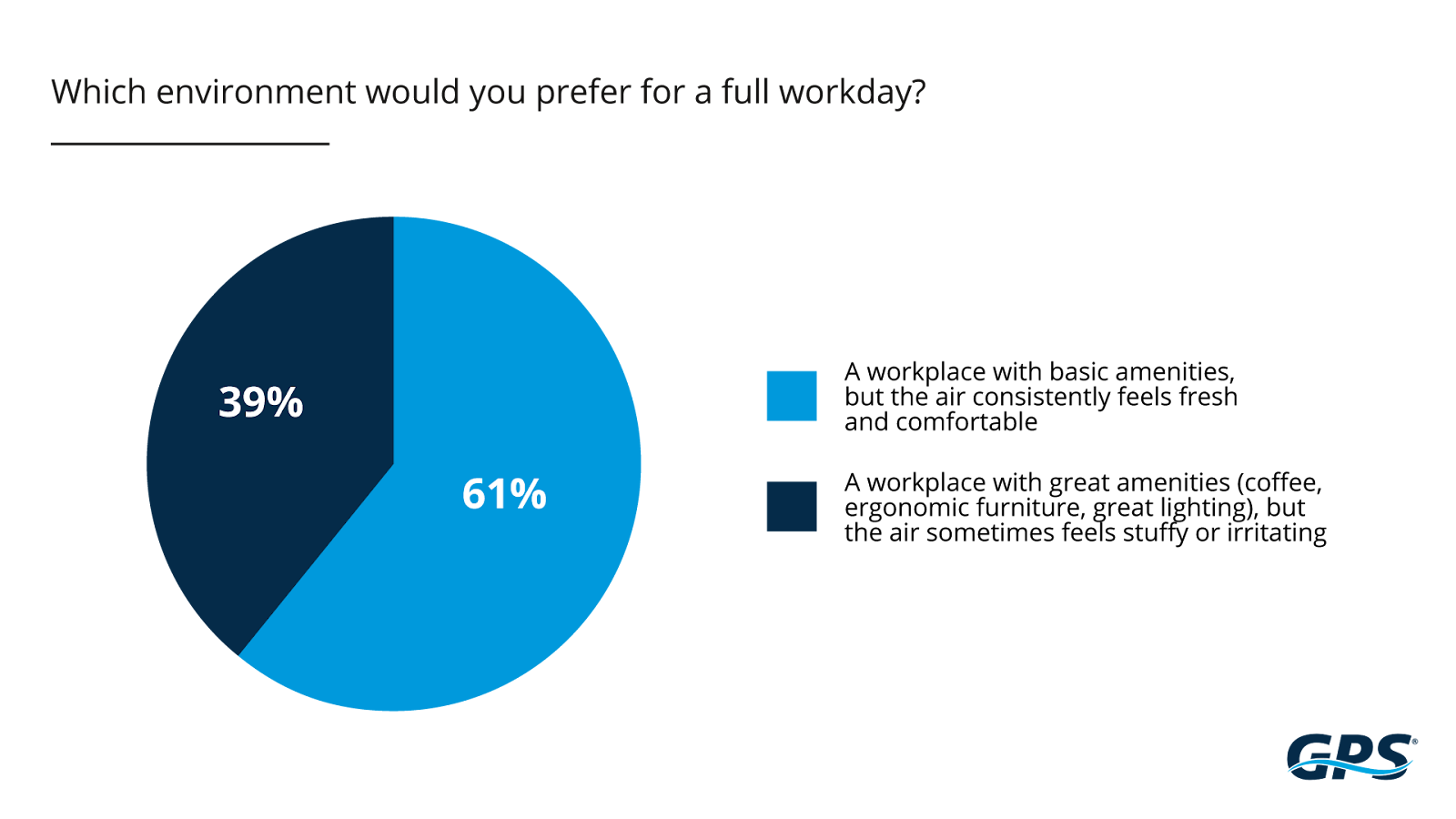
61% prefer a workplace with basic amenities where the air consistently feels fresh and comfortable.
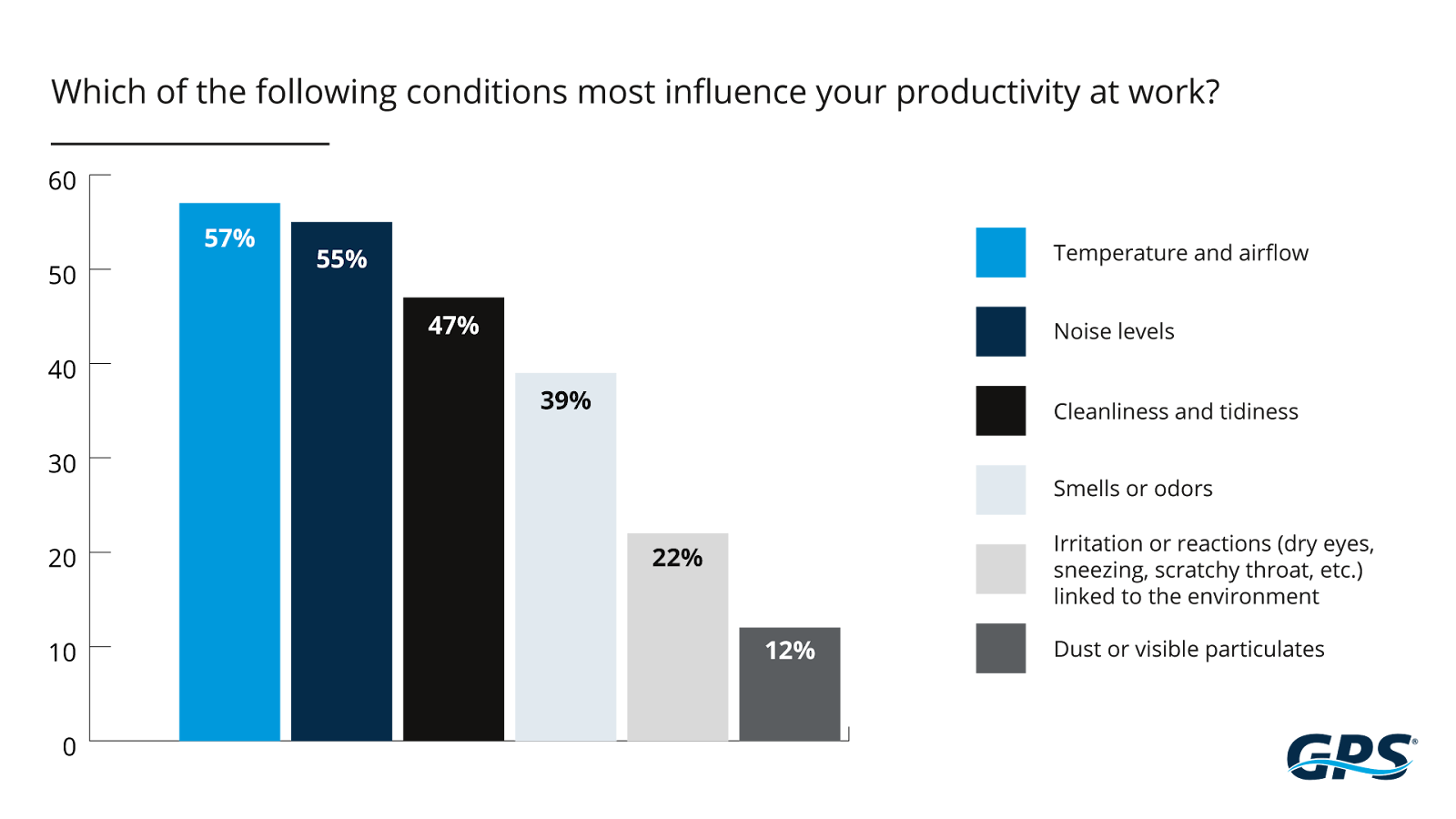
57% say temperature and airflow are the conditions that most influence their productivity at work.
For many workers, air quality and physical comfort are not secondary benefits. They are part of what makes the workplace feel functional, supportive, and worth returning to.
Employees Read Environmental Cues as Management Signals
Employees are not only reacting to comfort levels, but interpreting what workplace conditions say about how well the environment is being managed. In all, 69% say odd smells, dust, or temperature swings at least sometimes make them feel their workplace is not being maintained as carefully as it should be. When the environment feels consistently off, 32% say their first thought is that something is not being managed properly, while 26% say it feels like employee comfort and well-being are not a priority.
Employees are also clear about what signals a well-maintained workplace. Cleanliness and tidiness rank first at 56%, followed by comfortable temperature and airflow at 49%, and facilities that appear repaired and cared for at 47%.
Visible Action Builds Reassurance
Reassurance does not come from broad statements alone. Workers want signs that the environment is being actively monitored, maintained, and improved. Asked what would help reassure them that their workplace is being actively managed, 66% chose improved ventilation, airflow, or temperature control, while 60% chose clear updates about cleaning, maintenance, or building conditions.
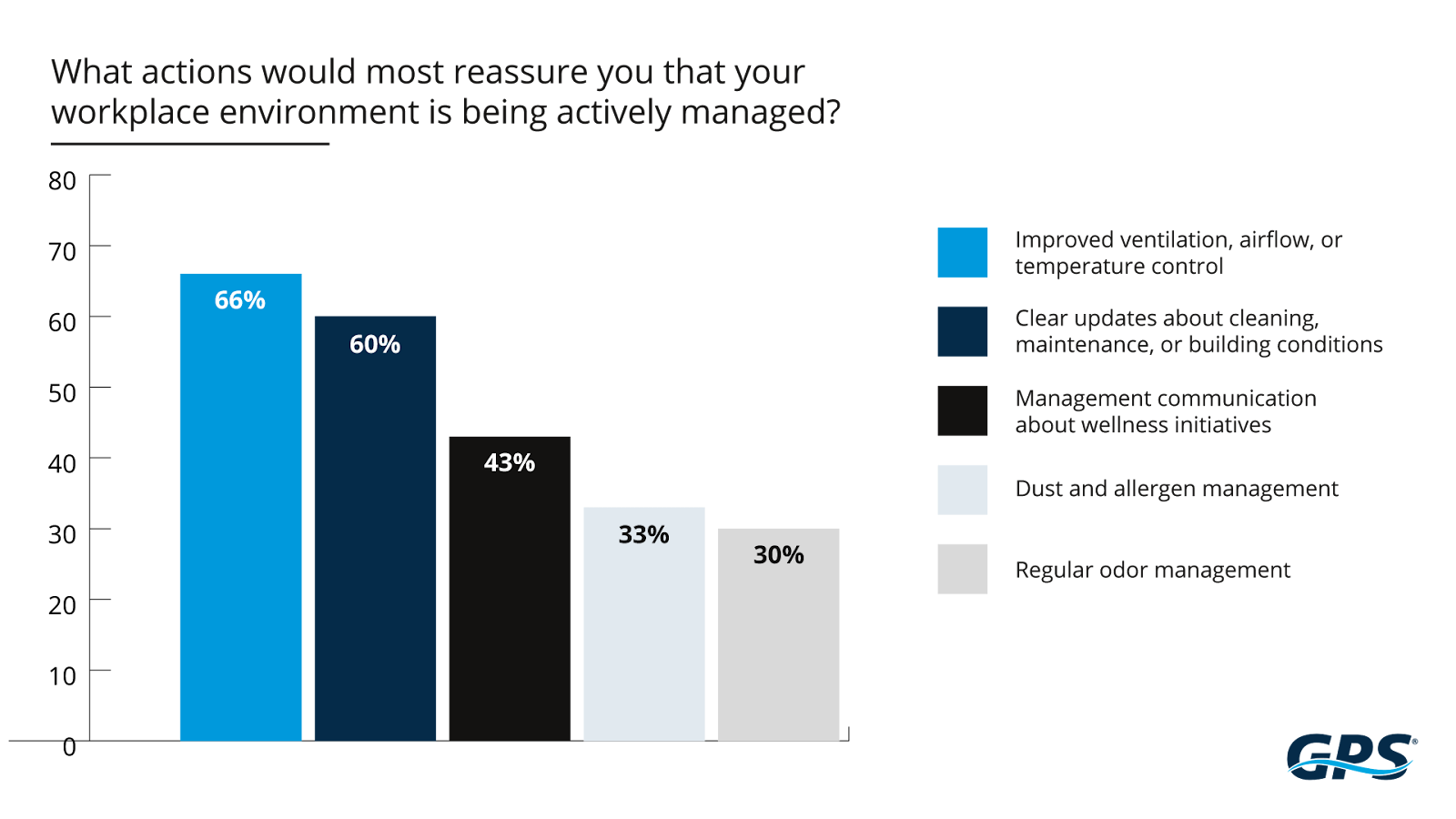
66% say improved ventilation, airflow, or temperature control would most reassure them that their workplace environment is being actively managed.
Workers are also clear about what kind of proof they find most believable. The top answer, at 38%, is a system that allows employees to report issues and see follow-through. The next most-selected option, chosen by 29%, is a simple monthly update on what is being done.
Communication frequency matters too. More than half of workers, 52%, say they want either weekly updates or always-available visibility into workplace conditions, while another 34% want at least occasional updates.
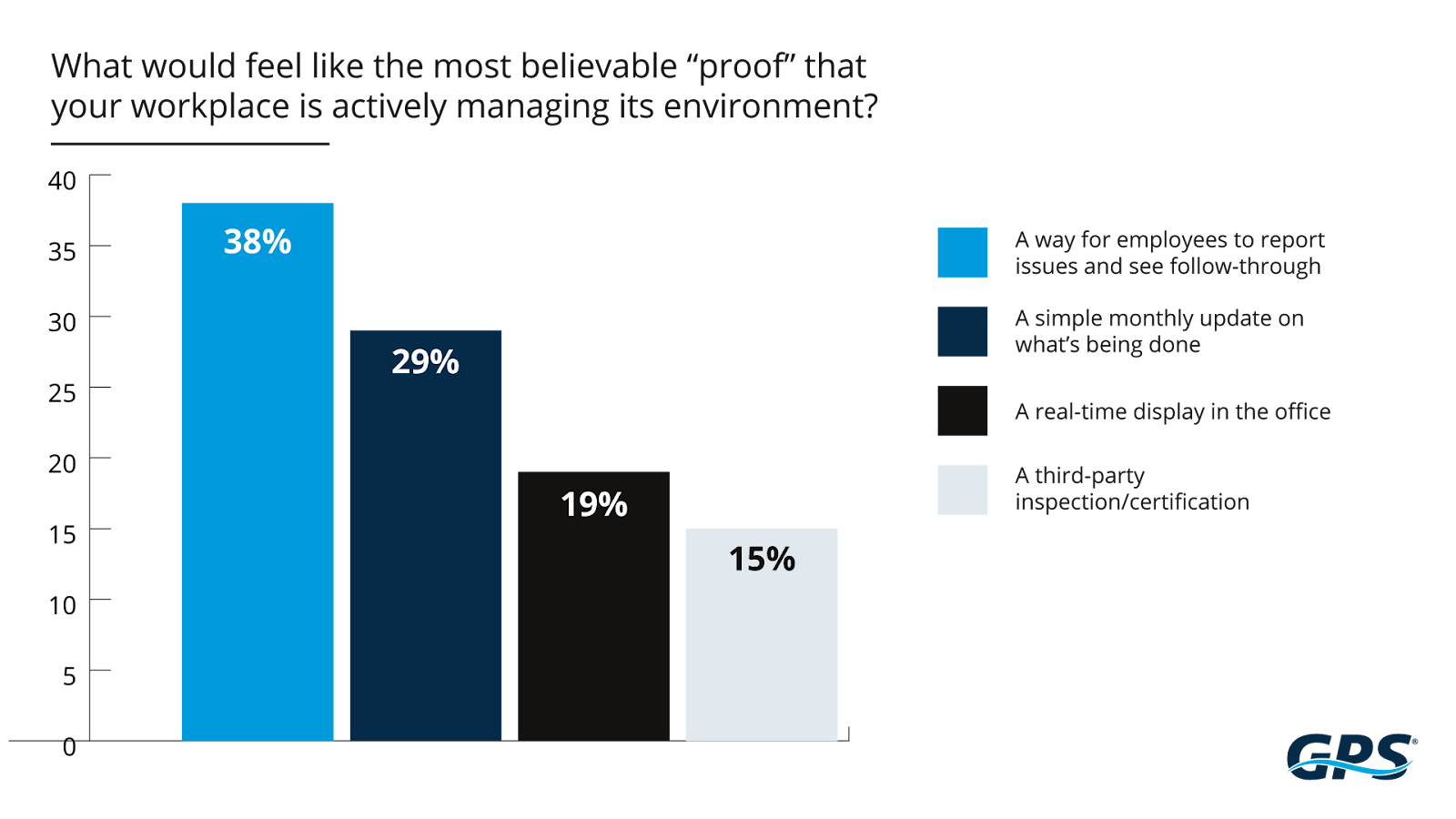
38% say a way for employees to report issues and see follow-through would be the most believable proof that their workplace is actively managing its environment.
Comfort Conditions Shape Trust in Leadership
Workplace conditions influence more than comfort. They also shape how employees feel about the people leading the organization. In all, 83% say noticeable conditions such as cleanliness, odor management, and dust control influence their confidence that leadership is prioritizing a well-managed work environment at least moderately, including 50% who say those conditions are very or extremely influential.
Visible efforts to improve workplace comfort and safety also carry emotional weight: 83% say those efforts would make them feel more respected as an employee. Employees read workplace comfort as signs of whether leadership notices details that affect them and whether employee experience is being taken seriously.
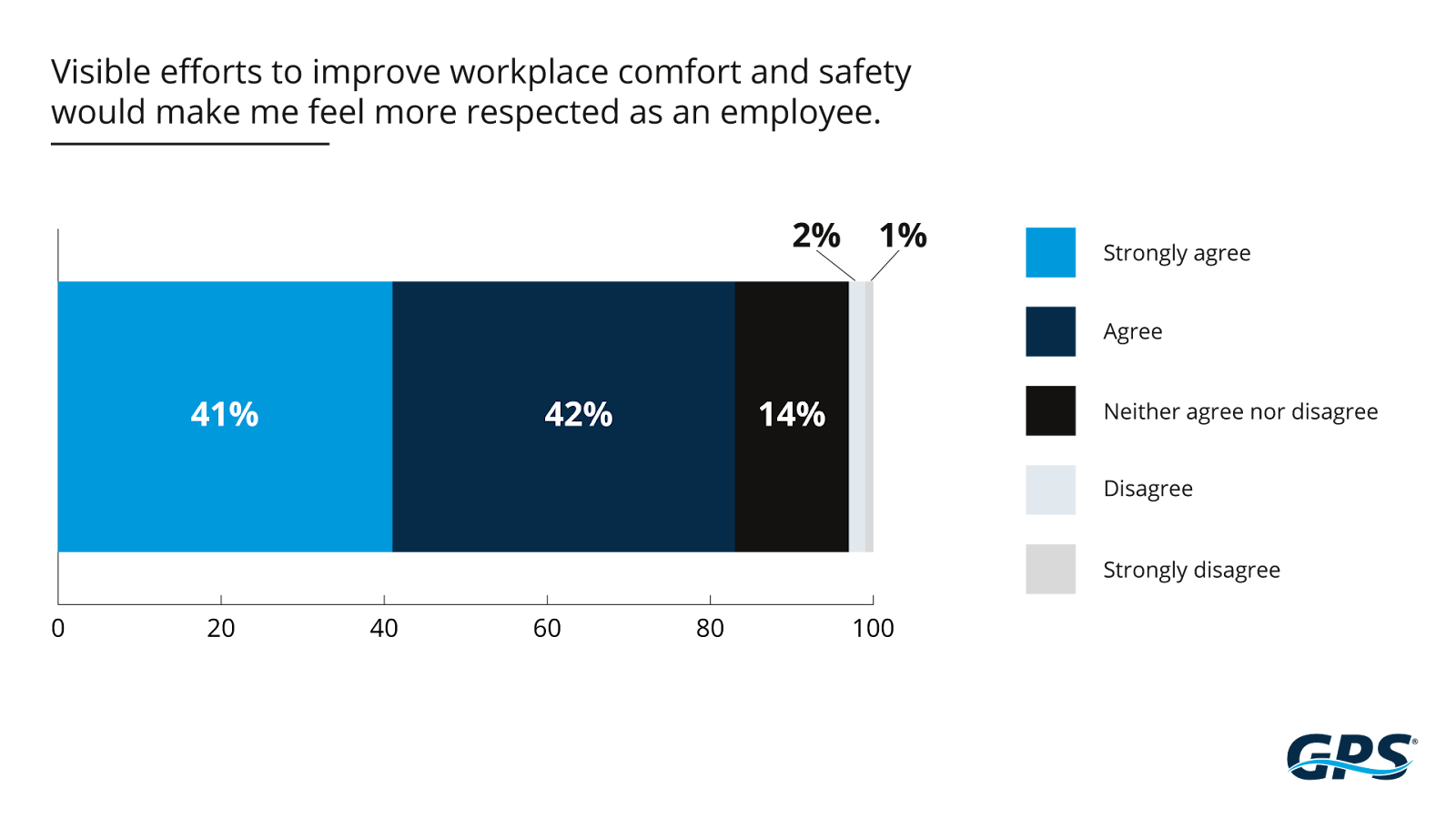
83% agree that visible efforts to improve workplace comfort and safety would make them feel more respected as an employee.
Communication Can Strengthen Willingness to Return
Communication can directly influence return-to-office sentiment. In all, 67% say they would be more willing to come to work if their company communicated the steps it takes to ensure a comfortable and healthy environment. That suggests visibility into workplace conditions matters alongside the conditions themselves.
When the environment feels off, the effects can show up quickly in employee behavior. Workers are most likely to report it to management or HR first at 24%, followed by powering through and enduring it at 20%, expressing their concerns among coworkers at 19%, and deciding to work from home the next chance they get at 18%. Another 17% say they take more breaks.
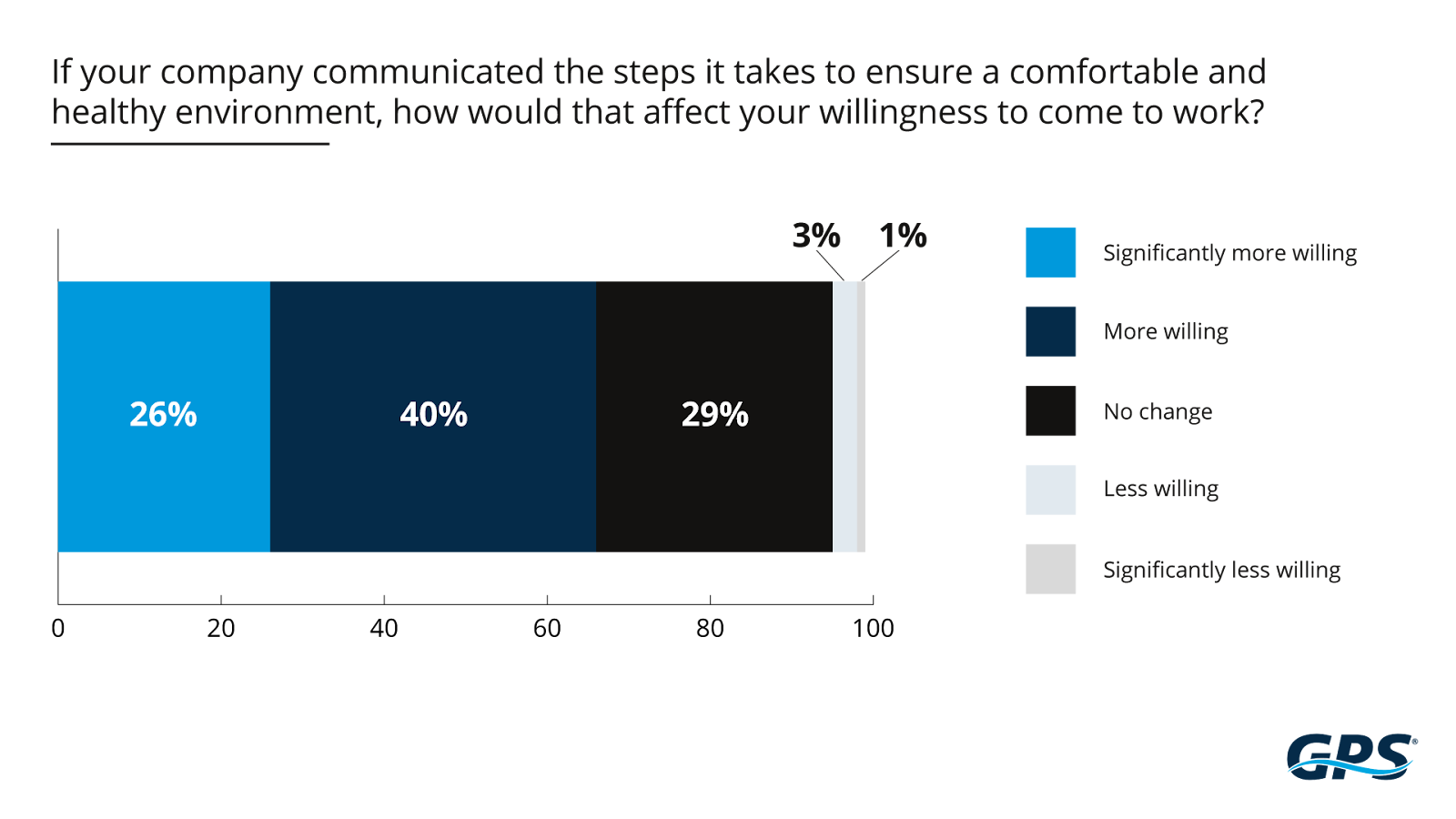
66% say they would be more willing to come to work if their company communicated the steps it takes to ensure a comfortable and healthy environment.
Conclusion
The return-to-office conversation is often framed around policy, flexibility, and culture. This report makes clear that the physical experience of the workplace belongs in that conversation too. Employees are paying close attention to whether a workplace feels fresh, comfortable, and consistently maintained, and they are using those cues to make broader judgments about trust, care, and whether the office is worth returning to.
Indoor air quality shapes daily comfort, supports productivity, and influences how workers view leadership priorities. For organizations looking to strengthen the return-to-office experience, that means the opportunity is not limited to merely offering more perks. It includes making the workplace itself feel healthier, more comfortable, and more visibly managed.
Methodology
The 2026 Indoor Air Quality Report: The Return-to-Office Reality Check was commissioned by GPS Air and conducted using the third-party survey platform Pollfish.
The survey was fielded in March 2026, among 750 U.S. adults who work in non-remote environments at least once a week, including office, education, healthcare, retail, hospitality, and other public-facing settings.
Some questions allowed respondents to select more than one answer, so totals may exceed 100%.