New Ways to Tackle
Old Problems.

Solve your Indoor Air Quality problems efficiently and affordably.

What Coil Fouling Costs Your Hvac System

Are Dirty Coils Putting Pressure on Your Budget?

Your air handler is working harder than it used to. The maintenance team is cleaning coils more frequently, and the intervals between cleanings keep getting shorter. Meanwhile, energy costs have drifted up. These are the signs of coil fouling in progress, and they snowball before most facilities realize what’s driving them.


Airborne particulates accumulate on heat exchanger coils over time. As buildup grows, airflow resistance increases. Static pressure rises above design values, and fan motors compensate by drawing more power.

On large air handlers running around the clock, that pressure penalty adds up into a measurable energy cost that most facilities don’t fully account for until they see the pattern in their maintenance records.


Fouling also shortens cleaning intervals. Facility teams that might otherwise service coils on an annual schedule find themselves increasing frequency as system data reveals performance degradation. Each cycle means labor, downtime, and the risk that repeated cleaning degrades fin geometry and reduces heat transfer capacity over time.


How Ionization Helps

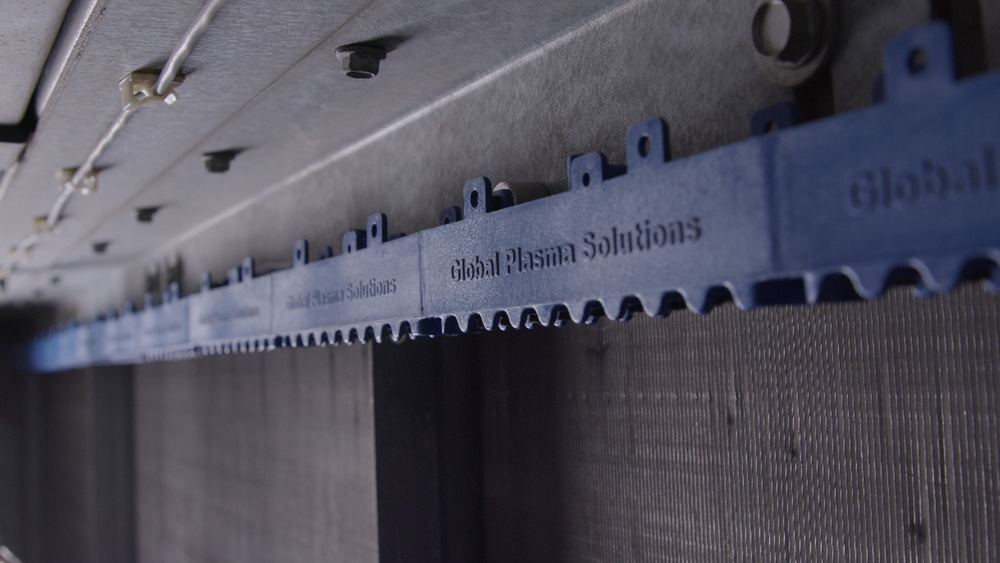
GPS-iMod® applies ionization evenly across the coil face to slow the rate of particulate accumulation on coil fins. Coils hold closer to design static pressure between cleaning cycles, which reduces the energy and maintenance demand that fouling would otherwise drive.

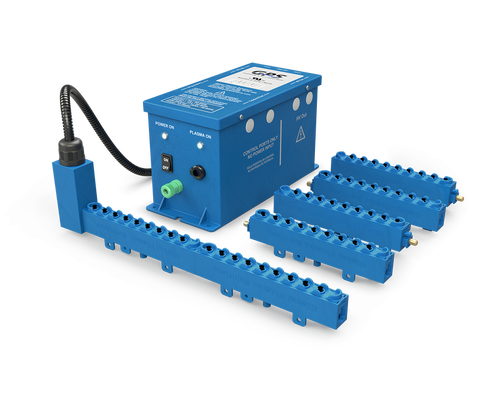
GPS-iMod® Modular Coil System

GPS-iMod helps you get more out of your system by keeping your coils cleaner longer, saving energy and reducing labor.
Are bad odors threatening your reputation?

Are invisible pollutants compromising your indoor air?

Coil Efficiency in Action

Save energy and reduce labor by keeping your coils cleaner longer. Simple, affordable, and efficient; get more out of your system, and your budget, with iMod technology.

Novant Sees Enhanced System Efficiency with iMod

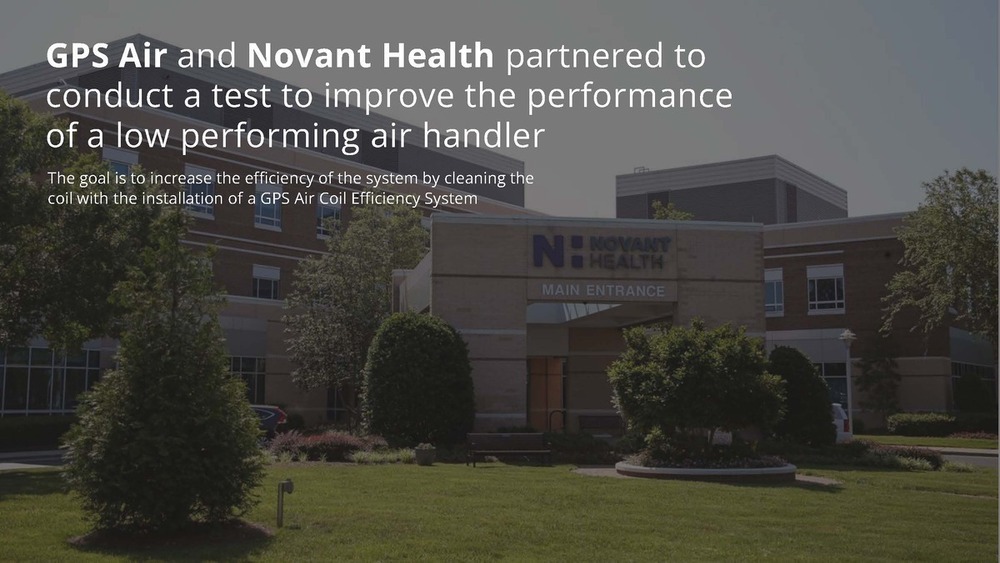
At Novant Health, a 28,000 CFM air handler had been running at 100% fan demand for over two years. The coil was compacted at over 3.5" static pressure, and the facility was facing a $70,000 coil replacement. GPS Air and Novant Health partnered to test GPS-iMod instead.

After installation, fan demand declined below maximum for the first time in two years.
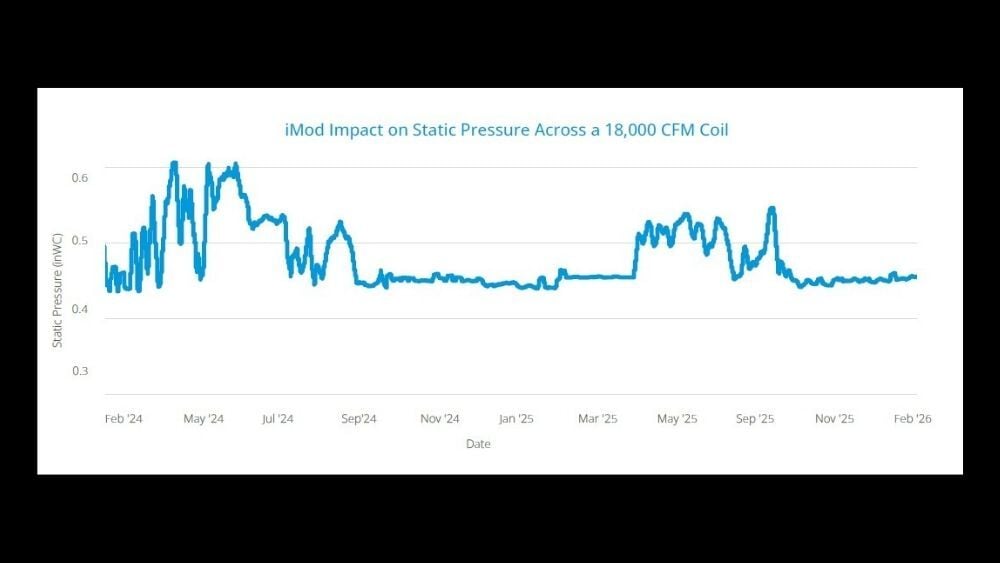
Lower Static Pressure & Higher Efficiency: 18,000 CFM Deep-Row Coil System

A large healthcare/life sciences facility was running at 0.65 inWC against a design static of 0.45 inWC. Rather than shutting the air handler down for a costly deep clean, GPS-iMod was installed.

Static pressure trended to design static and held there for 24 months, deferring the cleaning and extending system uptime.

Keeping Coils At Design Static Without Taking The Air Handler Offline

Traditional coil maintenance requires shutting down the air handler and manually cleaning the coil. That increases downtime, chemical use, and over repeated cycles, potential damage to fin geometry.

GPS-iMod takes a different approach with continuous ionization that slows the rate of fouling in the first place. Coils hold closer to design static pressure between cleaning cycles without requiring a shutdown.


Common Questions About Commercial Coil Fouling

What causes rising static pressure across a commercial HVAC coil?

Static pressure rises across the coil when accumulated particulates restrict airflow through the coil fins. As the buildup grows, fan motors draw more power to move the same air volume, and the system operates progressively further from its designed performance.

Coil fouling is the most common cause of unexplained static pressure increases in large air handlers, and it advances gradually enough that most facilities don’t connect the symptom to the source until the gap is significant.

How often should commercial air handler coils be cleaned?

Cleaning intervals depend on the environment and coil configuration, but most large commercial air handlers require at least annual coil cleaning, with high-particulate environments requiring more frequent cycles.

Deep-row coils in healthcare and life sciences settings typically accumulate fouling faster due to higher airborne load. When intervals are shortening faster than the maintenance schedule anticipated, it usually means fouling is advancing faster than the schedule accounts for.

Research from Lawrence Berkeley National Laboratory has documented that coils in commercial HVAC systems can accumulate enough fouling over years of operation to substantially raise evaporator pressure drop, with efficiency losses that compound on systems already running at tight margins.


Can coils be kept cleaner without shutting down the air handler?

GPS-iMod applies ionization continuously at the air-entering side of the coil, slowing particulate accumulation while the air handler stays in service. This extends the interval between manual cleaning cycles without requiring a shutdown.

In a study on an 18,000 CFM system at a large healthcare/life sciences facility, GPS-iMod brought static pressure from 0.65 inWC down to a design static of 0.45 inWC and held it there for 24 months, deferring a costly manual cleaning and maintaining uptime throughout.


How much energy does coil fouling waste in commercial HVAC?

The energy cost depends on how far above design static the system is running and how long it has been operating in that condition. Fan motors compensate for restricted airflow by drawing progressively more power, and chiller load rises as heat transfer efficiency falls.

For facility teams tracking energy trends, unexplained increases in AHU or chiller energy that don't correspond to changes in occupancy or weather are a reliable early signal of coil fouling in progress.

Talk to GPS Air about coil fouling in your system