How Needlepoint Bipolar Ionization Works: A Complete Guide for Building Owners

Needlepoint bipolar ionization (NPBI®) is one of the fastest-growing air purification technologies in commercial buildings, and for good reason. It actively treats air throughout a building using existing HVAC infrastructure, reduces energy costs, and requires almost no ongoing maintenance.

But how does it actually work? And what should building owners know before investing?

This guide covers the science, the practical benefits, the safety considerations, and the real-world results that make bipolar ionization, specifically needlepoint bipolar ionization (NPBI), a smart upgrade for commercial buildings.

What Is Needlepoint Bipolar Ionization?

Needlepoint bipolar ionization is an active air cleaning technology that generates both positive and negative air ions and releases them into the airstream. These ions interact with airborne particles, pathogens, and volatile organic compounds (VOCs), neutralizing contaminants in the occupied space rather than waiting for air to pass through a filter or UV light.

The term "bipolar" refers to the fact that the system produces ions of both polarities (positive ions and negative ions). This is distinct from negative-ion-only generators, which produce a single polarity and are a different technology category entirely.

GPS Air's patented NPBI® technology uses a low-energy approach that delivers high ion concentrations safely and effectively without producing ozone or other harmful byproducts. With over 300,000 installations worldwide, GPS Air is a leader in needlepoint bipolar technology.


How GPS Air's Needlepoint Bipolar Ionization Works

Needlepoint bipolar ionization is GPS Air's core technology, refined over decades of commercial installations. Here is how GPS Air's NPBI process works, step by step.

Step 1: Ion Generation

GPS Air's NPBI equipment is a soft ionization technology that utilizes bundled carbon fiber emitters to create an ion-rich cloud for distribution to the building spaces through the duct distribution system. . This process happens continuously as air moves through the HVAC system.

The "needlepoint" in NPBI refers to the fine-tipped carbon fiber emitters that produce ions at lower energy levels compared to high energy (hard ionization) discharge devices such as corona discharge or photocatalytic technology. Unlike hard ionization, which uses high energy to fragment molecules, soft ionization only adds an electron to or removes an electron from a molecule. The target molecule remains intact with a net charge.

This precision is what allows GPS Air's technology to generate high ion concentrations without producing ozone as a byproduct. GPS Air products like the CI-2 and DM-2 feature auto-cleaning emitters on a programmable cycle, maintaining consistent ion output without manual maintenance.

Step 2: Ion Distribution

Once generated, the ions are carried by the HVAC airstream throughout the building. Because the ions travel with the conditioned air, they reach occupied spaces, treating air where people actually breathe rather than only inside the mechanical system.

This is a key distinction from passive technologies like filtration and in-duct UV-C, which only treat air as it passes through the air handler. GPS Air's NPBI treats air continuously in the space itself. The closer ions can be delivered to the breathing zone, where contaminants and particles pose the biggest risks, the better they work.

For spaces where ductwork access is limited, the IDF-2 takes this principle further. The IDF-2 is a low-profile, quiet-operation ceiling tile fan with NPBI technology directly integrated, delivering ions into the room without requiring connection to the central HVAC system.

Step 3: Particle Agglomeration

Positive and negative ions attach to airborne particles, giving them a charge. Charged particles attract each other and clump together into larger clusters through a process called agglomeration. These larger particle clusters are then more easily captured by the building's existing filtration, even at standard MERV ratings.

The practical result: your existing filters become more effective without increasing static pressure or upgrading to denser filter media. GPS Air's testing shows that NPBI can boost a MERV 8 filter to MERV 13 equivalent performance for virus-sized particles.

Step 4: Pathogen Neutralization

Ions modify the charge of, and interact with the surface proteins of certain airborne viruses and bacteria. Surface proteins are the mechanism for these viruses and bacteria to attach to cells and to reproduce. This process happens in the airstream throughout the building, not just inside the ductwork.

GPS Air has invested extensively in third-party laboratory testing to validate NPBI's effectiveness against specific pathogens. Published results cover SARS-CoV-2 and the Delta variant, E. coli, Influenza A and B, MRSA, Staph, and RSV. All testing is conducted by independent laboratories and the results are publicly available.

Step 5: Odor Reduction

Ions reduce volatile organic compounds and odor-causing molecules, which is is particularly helpful in protecting indoor air from common odors, including exhaust, diesel fumes, smoke, and cooking smells.

NPBI vs. Corona Discharge Ionization

Not all ionization technology is the same, and this distinction matters for building owners.

Corona discharge ionization is an approach that uses high-voltage electrical discharges to generate ions. While effective at ion production, corona discharge systems can produce ozone as a byproduct, a respiratory irritant and a regulated pollutant under EPA and OSHA standards.

Needlepoint bipolar ionization uses precisely controlled, lower-energy carbon fiber bundles or emitters that generate ions without producing ozone. This advancement is what made ionization viable and safe for occupied commercial buildings.

The key certification to look for is UL 2998, which tests for zero ozone emissions under normal operating conditions. GPS Air carries UL 2998 certification across its entire NPBI product portfolio, meaning every GPS Air product meets the most stringent zero-ozone standard available, from the he compact CI-2 to the smartIAQ platform.

Building owners should be cautious of ionization products that do not carry UL 2998 certification, regardless of marketing claims about "low ozone" or "negligible ozone." Zero is the standard.

Practical Benefits for Building Owners

Lower Maintenance Costs

GPS Air's NPBI systems have no consumable components. Auto-cleaning carbon fiber brush emitters maintain consistent ion output on a programmable cycle. There are no filters to replace, no UV lamps to change, and no chemical media to refresh. Products like the CI-2 and DM-2 feature auto-cleaning emitters that maintain performance over the life of the unit without manual intervention.

Improved Filtration Performance

By agglomerating small particles into larger clusters, NPBI makes existing filters more effective. Buildings can maintain standard MERV-rated filters rather than upgrading to high-efficiency filters that increase static pressure and energy consumption.

This means improved air quality without the added cost and energy penalty of denser filter media.

Broad-Spectrum Air Treatment

Unlike technologies that address only one category of contaminant, GPS Air's NPBI simultaneously treats particles, pathogens, VOCs, and odors.

For building owners who want a single technology that covers the full spectrum of indoor air quality concerns, this versatility simplifies the technology stack and reduces the number of systems to purchase, install, and maintain.

GPS Air Product Options: Matching the Right System to Your Building

GPS Air offers multiple NPBI configurations to match any building type and application:
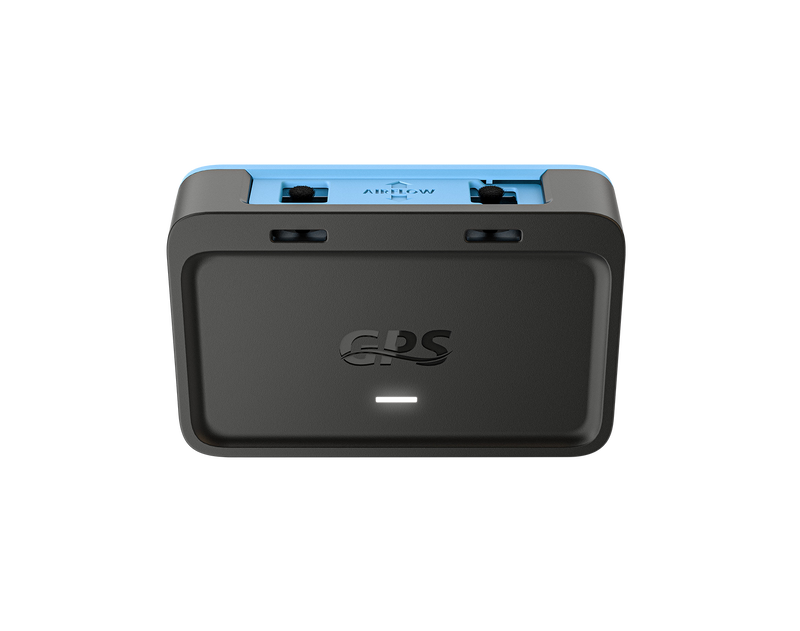
CI-2 Auto-cleaning compact needlepoint bipolar ionization NPBI device designed for applications with limited space.

CI-2®

Compact, auto-cleaning NPBI system for in-plenum and in-space installations.

Lightweight design fits where traditional ionizers cannot, making it a versatile option for retrofits and tight mechanical spaces.
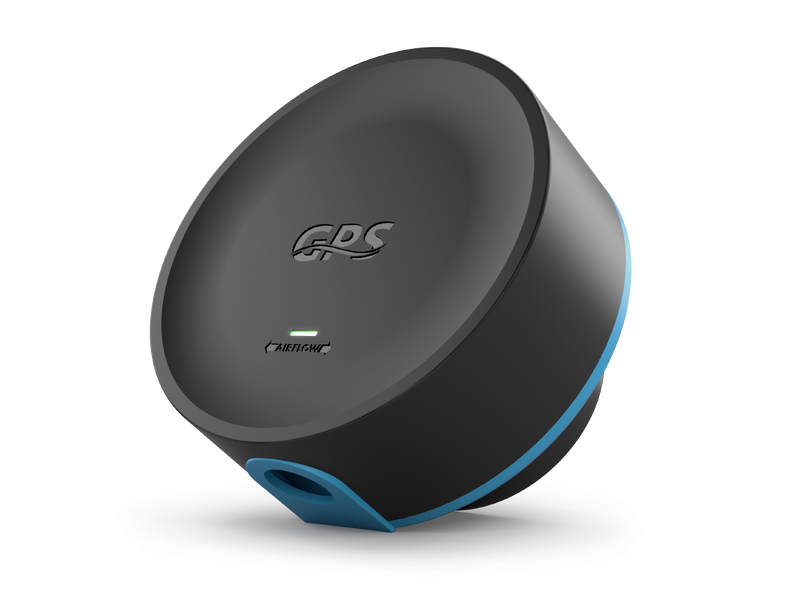
GPS Air DM-2 is a duct-mounted NPBI soft ionization device equipped to effortlessly mount onto circular ducts.

DM-2®

Duct-mounted NPBI system with downstream positioning for optimized ion delivery closer to occupied spaces.

Designed for easy integration into circular duct systems.
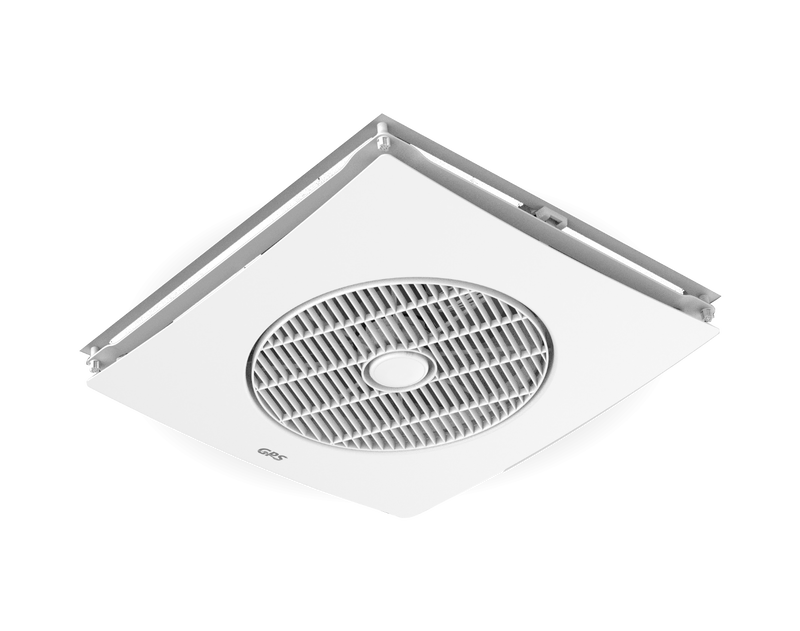
The IDF-2 is a low-profile, quiet operation ceiling tile fan with NPBI® soft ionization technology directly integrated.

IDF-2®

Quiet ceiling tile fan with integrated NPBI technology delivers ions directly into occupied spaces without HVAC connection.

Ideal for spas and noise-sensitive environments with limited ductwork access.
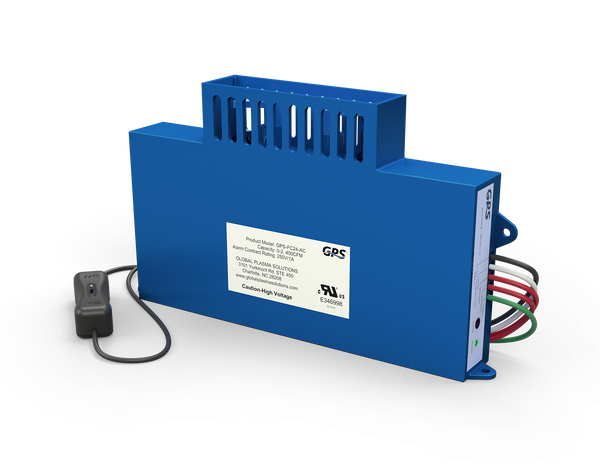
The FC-24 is an NPBI product designed for multiple mounting options including fan inlet, interior duct walls or floors.

GPS-FC24-AC®

Auto-cleaning, lightweight NPBI system with flexible mounting configurations.

Can be installed at fan inlets, on interior duct walls, or in other locations where adaptability is needed.
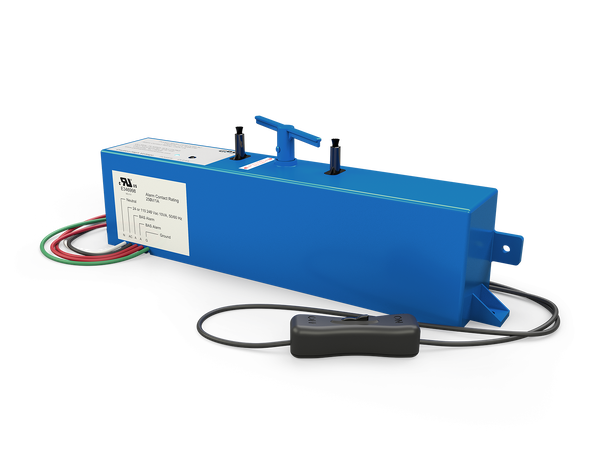
The FC-48 is an NPBI product designed for multiple mounting options including fan inlet, interior duct walls or floors.

GPS-FC48-AC®

Auto-cleaning NPBI system designed for larger-capacity applications, handling up to 4,800 CFM or 12 tons of capacity.

Built for commercial buildings with high-volume air handling requirements
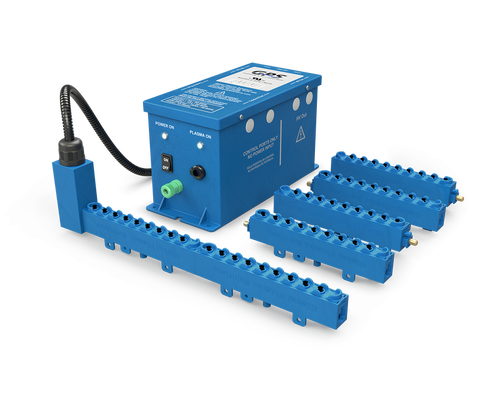
The GPS-iMod, a simple way to keep coils clean and stop outside odors. Get more out of your system and your budget.

GPS-iMod®

Simple, affordable NPBI solution for coil cleaning and odor elimination.

A budget-conscious option for buildings that need effective ionization without complex installation.


Common Questions from Building Owners

Does bipolar ionization produce ozone?

Modern needlepoint bipolar ionization systems certified to UL 2998 produce zero ozone. This is a critical distinction from older corona discharge systems. GPS Air carries UL 2998 certification across every product in its portfolio, meaning zero ozone is guaranteed, not just claimed.

How is NPBI different from the negative ion generators sold for homes?

Negative ion generators produce only one polarity of ions. While single-polarity ionization has legitimate commercial applications — GPS Air's own Opti-Lok system uses negative ions to enhance filter performance — it serves a different purpose than NPBI.

Bipolar ionization generates both positive and negative ions, enabling particle agglomeration, pathogen neutralization, and VOC reduction simultaneously. GPS Air's commercial NPBI systems are engineered for integration with commercial HVAC infrastructure and sized to treat entire buildings.

Does NPBI replace my existing filtration system?

No. GPS Air's NPBI works alongside existing filtration, making your current filters more effective by agglomerating small particles into larger clusters that are easier to capture.

Your building's standard MERV-rated filters remain in place and perform better with NPBI operating in the airstream.

Can NPBI be installed in any HVAC system?

GPS Air's NPBI product portfolio covers virtually every commercial HVAC configuration, from rooftop units and air handlers to fan coil units, heat pumps, PTACs, and ductless mini-splits.

The IDF serves spaces where ductwork access is limited, laying into a standard ceiling tile with quiet, integrated NPBI — no connection to the central mechanical system required.

Certifications and Standards

UL 2998 (Zero Ozone Emissions)

Confirms zero ozone production under normal operating conditions. GPS Air carries this certification across every branded product. Non-negotiable for commercial installations.

ASHRAE
62.1-2019

Establishes the first safety standards for air cleaners, directly related to UL 2998 certification. Standard 241 provides a framework for evaluating air cleaning technologies used in commercial buildings for infection risk management.

ASHRAE
Standard 241

Establishes the first safety standards for air cleaners, directly related to UL 2998 certification. Standard 241 provides a framework for evaluating air cleaning technologies used in commercial buildings for infection risk management.

Third-Party Efficacy Testing

Independent laboratory testing for pathogen reduction (SARS-CoV-2, E. coli, Influenza, MRSA, RSV), particle reduction, and VOC neutralization. All results publicly available.

UL
867

Safety certification for electrostatic air cleaners. GPS Air products are certified to UL 867 in addition to UL 2998.

The Bottom Line for Building Owners

Needlepoint bipolar ionization is a practical, low-maintenance air purification technology that addresses particles, pathogens, VOCs, and odors simultaneously. GPS Air's NPBI systems install into existing HVAC infrastructure without modifications, require virtually no maintenance with auto-cleaning emitters, and treat air continuously in the occupied space — not just inside the duct.

With UL 2998 zero-ozone certification across the full NPBI product line and extensive third-party testing, GPS Air's technology is proven and safe for commercial buildings of any size.