

of workers would trade workplace amenities for measurably fresher air
installations worldwide
validated for zero ozone emissions
As employers require employees to return to the office, workers are responding with some requests of their own. Namely, they care more about the physical environment more than most employers expected. According to the 2026 GPS Air indoor air quality survey, 61% of workers say they would choose a workplace with fresher, more comfortable air over one with better amenities for a full workday. A separate finding from the same survey shows that 38.4% of workers say the difference in comfort and air quality between their home and office directly affects their productivity.
With property owners trying to boost occupancy rates, and employers competing for talent, these new demands are occupancy risk factors. Employees are making decisions about where they do their best work, and the air they breathe is a major factor. In many cases, it’s more important than compensation packages and amenities.
Facility and operations leaders must respond by ensuring their building’s mechanical systems and documentation can meet these expectations.


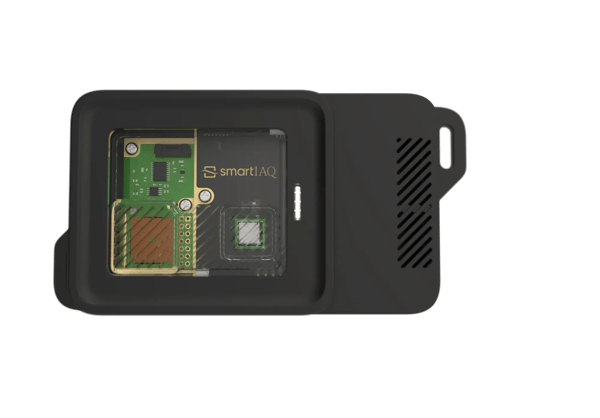
For whole-floor deployments and multi-zone office environments, the smartIAQ centralized configuration side-streams from an existing AHU to deliver IAQP-compliant air cleaning across multiple zones from a single unit. Closed-loop monitoring adjusts cleaning output continuously based on real-time contaminant levels. BACnet or Modbus integration puts air quality performance data inside the building management system alongside every other operational metric.

In conference rooms HVAC systems are sized for peak occupancy in one room, which impacts equipment decisions for the entire floor. smartIAQ GridSet solves this by delivering IAQP-compliant air cleaning at the room level, independent of central HVAC. Each unit drops into a standard ceiling grid with no ductwork modification, runs on 48V DC low-voltage power over CAT-5 cable, and covers up to 1,500 square feet at approximately $2,000 per unit installed. CO2-based occupancy sensing means the unit idles when the room is empty and cleans when it is in use, extending filter life and avoiding the energy cost of conditioning outside air for a room that is rarely at capacity.
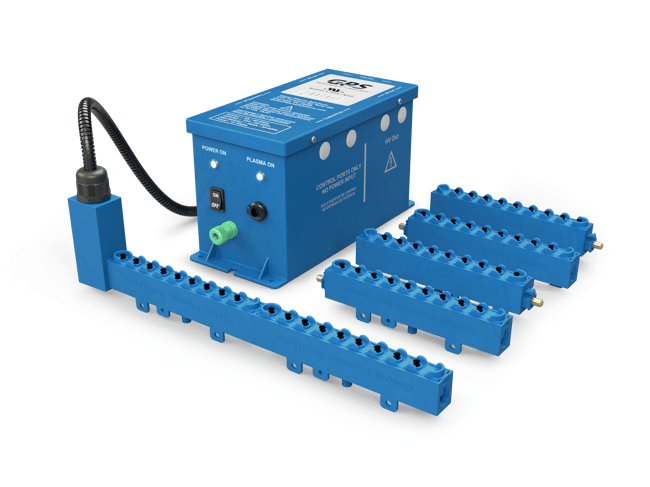
GPS Air’s Needlepoint Bipolar Ionization (NPBI®) soft ionization technology addresses the odors, particles, and air quality conditions that employees and tenants experience throughout the building day.
In office and mixed-use environments, NPBI targets odors, fine particles, and certain airborne viruses and bacteria. In shared spaces, break rooms, lobbies, and multi-tenant corridors, odors generated by occupant activity and food preparation accumulate in ways that ventilation alone does not resolve. In high-traffic common areas, NPBI’s particle agglomeration effect helps particles cluster into sizes that standard filtration captures more efficiently, reducing the fine particulate load that recirculates through shared HVAC systems. For pathogen mitigation in occupied spaces, GPS Air’s third-party testing data is available at gpsair.com/resources/third-party-testing.

GPS-iMod addresses inbound odors from outside air intakes and gradual coil fouling that degrades system performance.
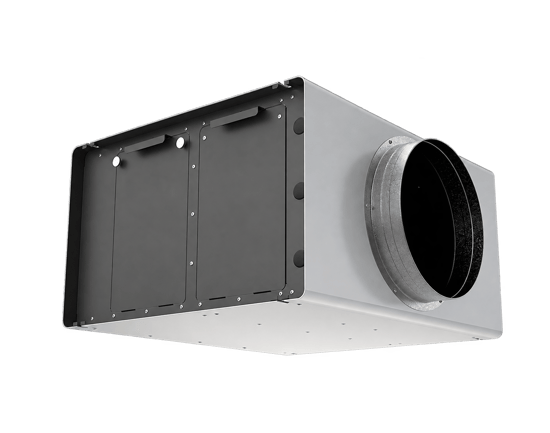
On the odor side, cooking exhaust, diesel fumes, vehicle emissions, and smoke enter the building through outside air intakes and are distributed to every floor on that air handler. Changing filters and cleaning ducts rarely resolves the complaint because the source is upstream. GPS-iMod applies soft ionization at the AHU, reducing odors from vehicle exhaust, kitchen exhaust, smoke, and similar sources before they enter the ductwork and reach occupied spaces.
On the efficiency side, particulate and biological buildup on coil fins increases static pressure over time, forcing supply fans to work harder and consume more energy to maintain design airflow. GPS-iMod reduces the rate of that fouling, helping coils hold closer to design static pressure between service cycles and extending cleaning intervals.
For building owners where certification influences leasing strategy or ESG commitments, GPS Air supports WELL Building Standard certification and LEED IAQP credit pathways. smartIAQ’s sensor data and air quality logs also provide the documented, timestamped record of indoor environmental conditions that ESG disclosure frameworks may require.
For general inquiries or project-level Application Engineering support, the team is available to assist.