


Energy Savings from Indoor Air Quality Technology: What Building Owners Should Know
Only 15% trust that the outside air buildings pull in gets cleaned, and just 12% of K-12 parents are very confident their schools keep the air healthy
When wildfire smoke, pollen or other poor outdoor conditions roll in, the usual advice is to go inside. The Environmental Protection Agency recommends limiting time outdoors during heavy smoke and taking steps to keep indoor air clean. But schools, offices and stores pull in air from outside through their heating and cooling systems, and smoke, pollen and other contaminants can enter buildings through those systems, doors and windows, raising questions about how well indoor spaces protect occupants when outdoor air quality deteriorates.
To learn how people handle bad air days and what they expect from the buildings they turn to, GPS Air surveyed 750 U.S. adults who experience poor outdoor air where they live.
About the 2026 GPS Air Indoor Air Quality Report: Smoke, Pollen and Bad Air Days
The 2026 GPS Air Indoor Air Quality Report: Smoke, Pollen and Bad Air Days was conducted in October 2026 via the third-party survey platform Pollfish among 750 U.S. adults who experience poor outdoor air conditions where they live, such as extreme heat, high pollen, smog, wildfire smoke or air quality alerts.
Key Findings of the 2026 GPS Air Indoor Air Quality Report
- 83% say the last bad air day changed how they spent their day.
- Only 15% think the outside air that buildings pull in through their heating and cooling systems gets cleaned before it reaches the people inside.
- 58% believe indoor air is better than outdoor air on a bad air day.
- 70% have noticed a problem inside a building on a bad air day, including 68% of those who believe indoor air is better.
- 32% have skipped going somewhere indoors because they weren't sure the air inside would be any better.
- Only 28% say a place they go often has told them what it does to keep indoor air clean on bad air days.
- 60% expect buildings to clean the air more than usual or bring in less outside air on bad air days.
- 60% say bad air days have cost them time or money.
- Only 12% of K-12 parents are very confident their local schools keep indoor air healthy on bad air days.
How Poor Air Quality Affects Daily Activities
83%
of respondents say the last bad air day where they live changed how they spent their day.
Source: 2026 GPS Air Indoor Air Quality Report: Smoke, Pollen and Bad Air Days
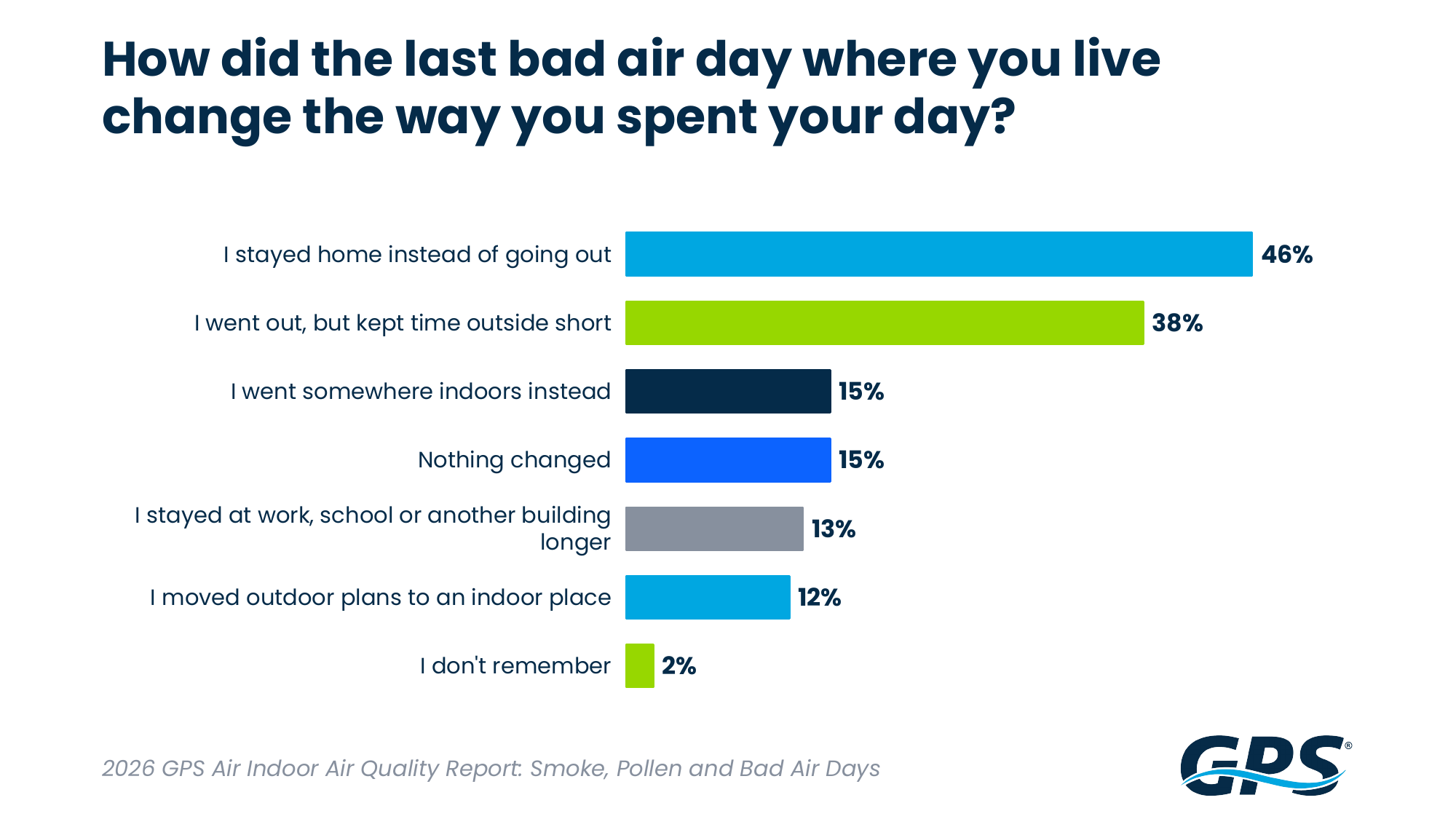
83% of respondents say the last bad air day changed how they spent their day. 46% stayed home instead of going out, and 38% went out but kept their time outside short. Just 15% said nothing changed.
Respondents dealt with a mix of conditions in the past year, including extreme heat (68%), high pollen (60%), wildfire smoke or haze (54%) and air quality alerts (49%).
90% took at least one step because of bad air in the past year. The most common were closing the windows and running the AC (52%), checking air quality before going out (45%) and skipping a walk, run or outdoor workout (40%).
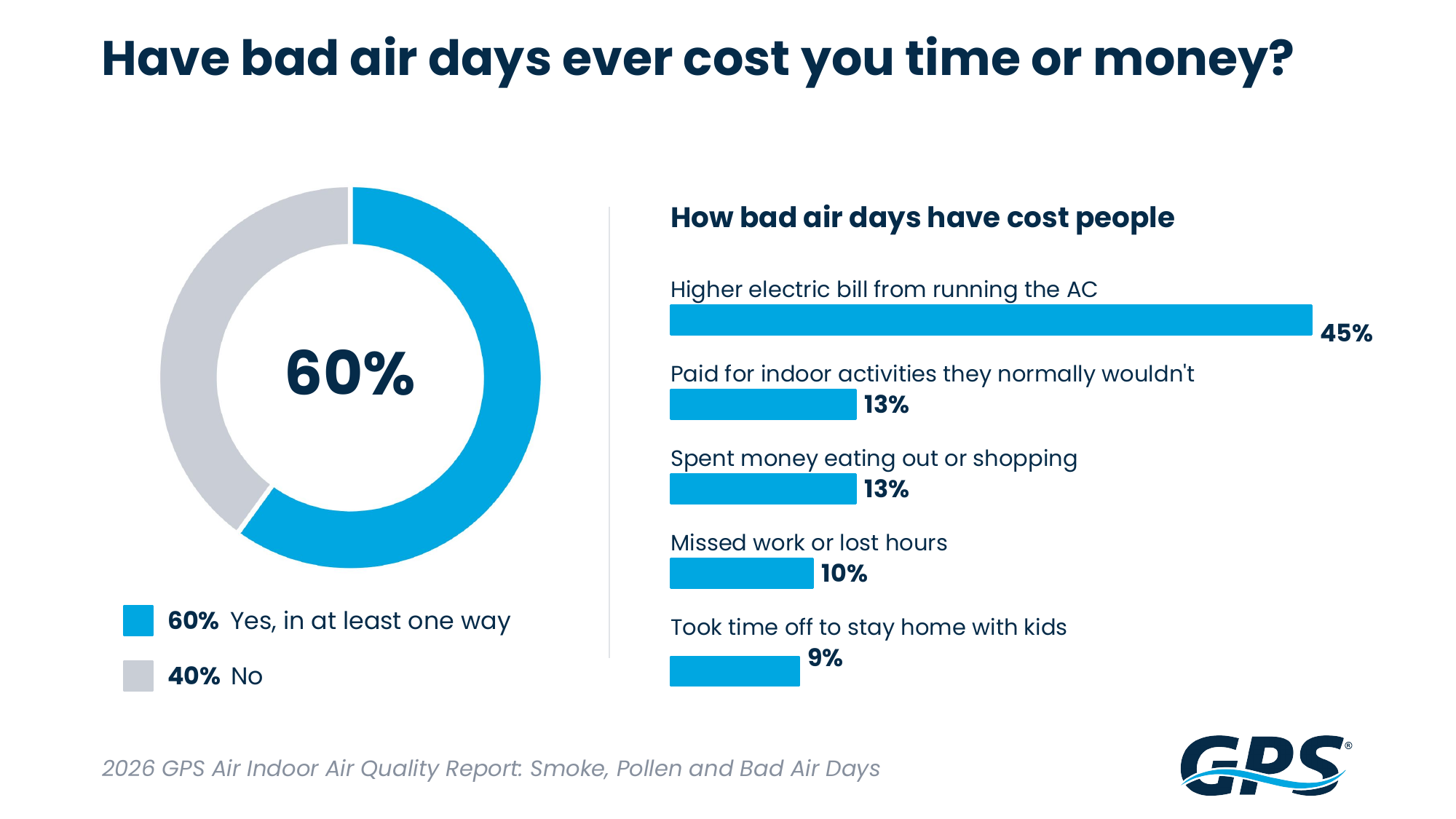
60% say bad air days have cost them time or money, rising to 74% among people who experience bad air days often. The biggest cost is a higher electric bill from running the AC (45%), and 10% have missed work or lost hours.
What People Know About Building Ventilation and Air Quality
15%
of respondents think the outside air a building pulls in on a bad air day gets cleaned before it reaches the people inside.
Source: 2026 GPS Air Indoor Air Quality Report: Smoke, Pollen and Bad Air Days
Large buildings like offices, schools and stores pull in air from outside through their heating and cooling systems. Asked what happens to that air on a bad air day, only 15% of respondents think it gets cleaned before it reaches the people inside. 53% think some of the pollution, pollen or smoke probably gets in, and 14% didn't know buildings pull in outside air at all.
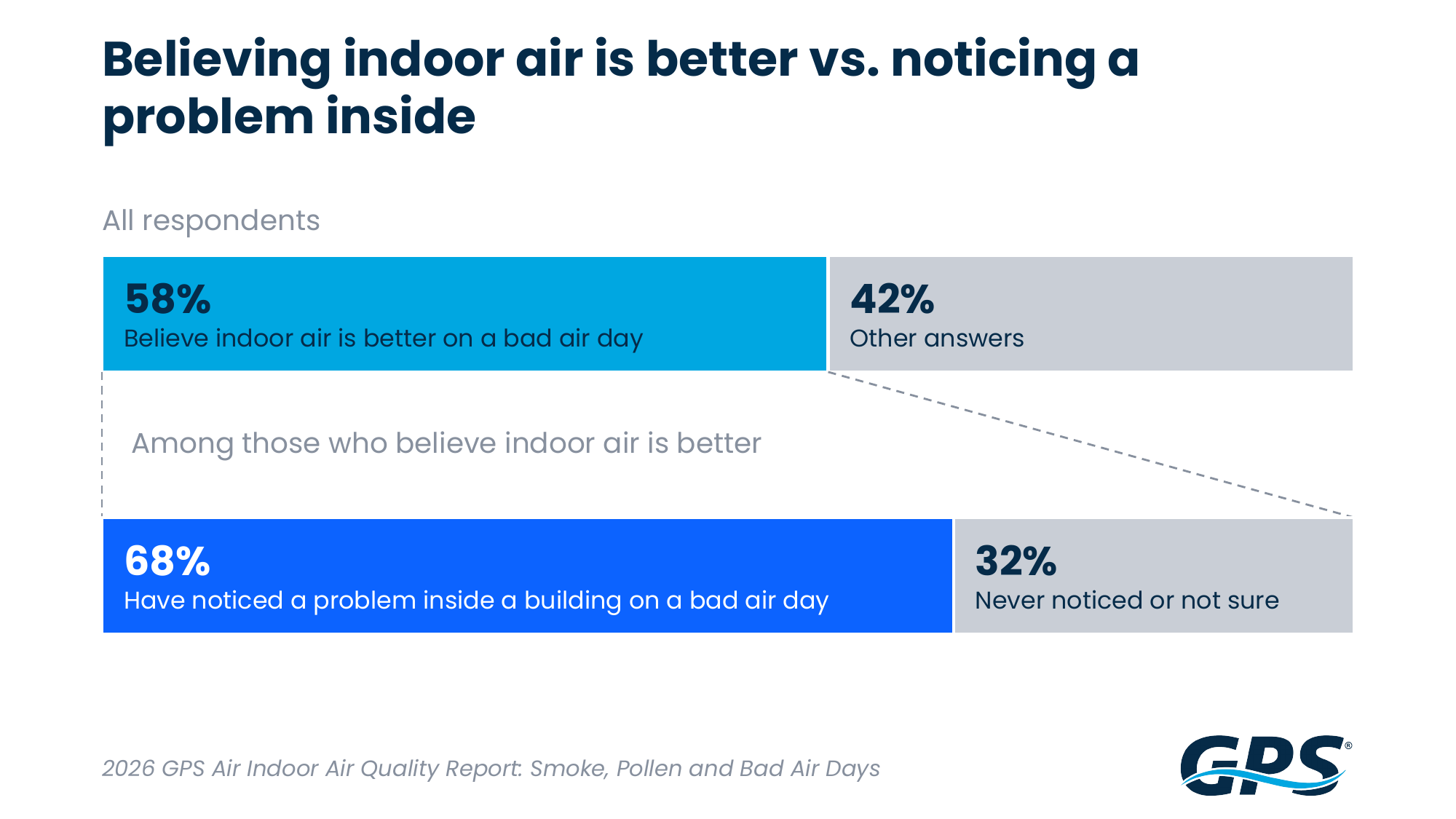
Even so, 58% of respondents believe indoor air is better than outdoor air on a bad air day, and 28% say going inside "pretty much solves it."
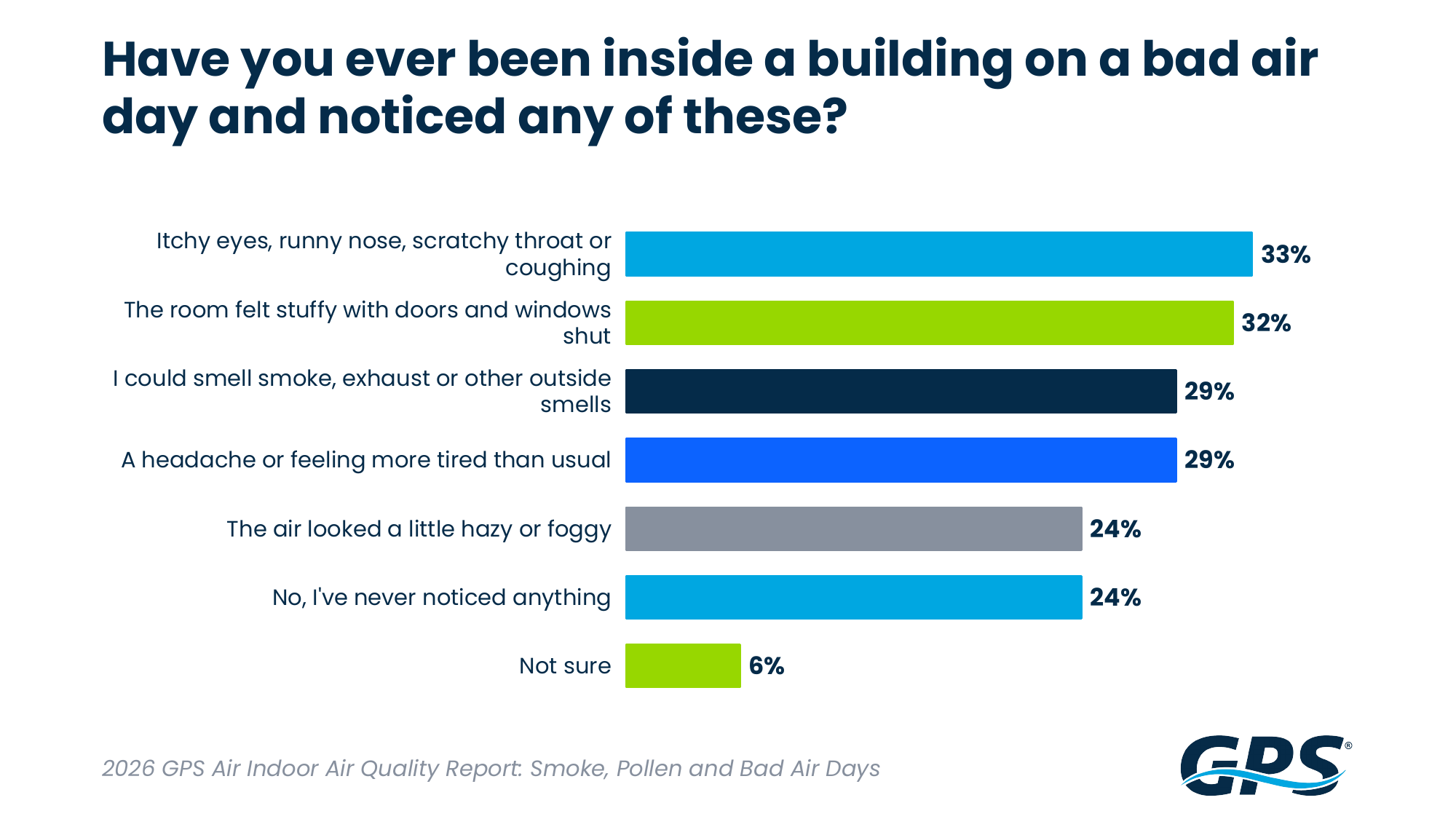
But 70% have been inside a building on a bad air day and noticed a problem with the air. A third had itchy eyes, a runny nose, a scratchy throat or a cough (33%), and nearly as many said the room felt stuffy with the doors and windows shut (32%). 29% smelled smoke, exhaust or other outside smells indoors.
That includes people who think going inside helps. 68% of those who believe indoor air is better have still noticed a problem inside on a bad air day.
Indoor Air Quality Concerns and Building Communication
32%
of respondents have skipped going somewhere indoors because they weren't sure the air inside would be any better.
Source: 2026 GPS Air Indoor Air Quality Report: Smoke, Pollen and Bad Air Days
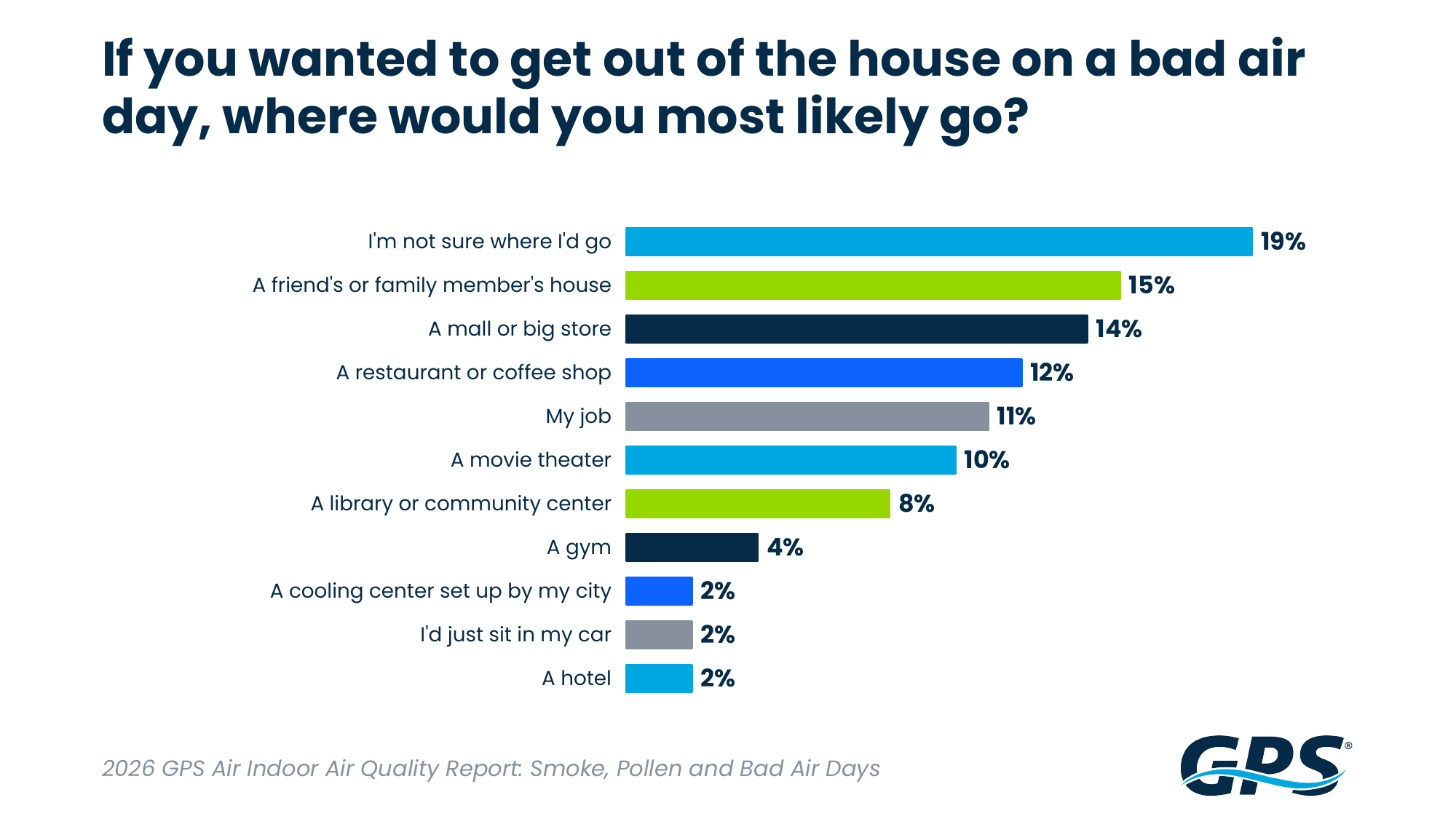
32% of respondents have skipped going somewhere indoors, like a store, gym or restaurant, because they weren't sure the air inside would be any better. 19% aren't sure where they'd go to get out of the house on a bad air day, the most common answer to that question.
Just 17% of respondents think most public buildings keep outdoor pollution, pollen and smoke out very well, and few have heard from those buildings directly. Only 28% say a place they go often has told them what it does to keep indoor air clean on bad air days. 59% say no place has, and 14% aren't sure. Among those who were told, nearly half (13% of all respondents) said knowing made them feel better about being there.
Only 18% knew that some buildings can clean indoor air to reduce their reliance on outdoor air while maintaining appropriate ventilation. Another 42% said this was new to them, while 39% said they may have heard something about it.
That leaves room for building operators to share what they do on bad air days. That could mean letting people know when a building is bringing in less outdoor air, cleaning the air inside more than usual, or posting indoor air quality data where people can see it, so they know before they arrive whether the air inside is being managed.
What People Expect From Buildings on Poor Air Quality Days
60%
of respondents expect buildings to clean the air more than usual or bring in less outside air on bad air days.
Source: 2026 GPS Air Indoor Air Quality Report: Smoke, Pollen and Bad Air Days
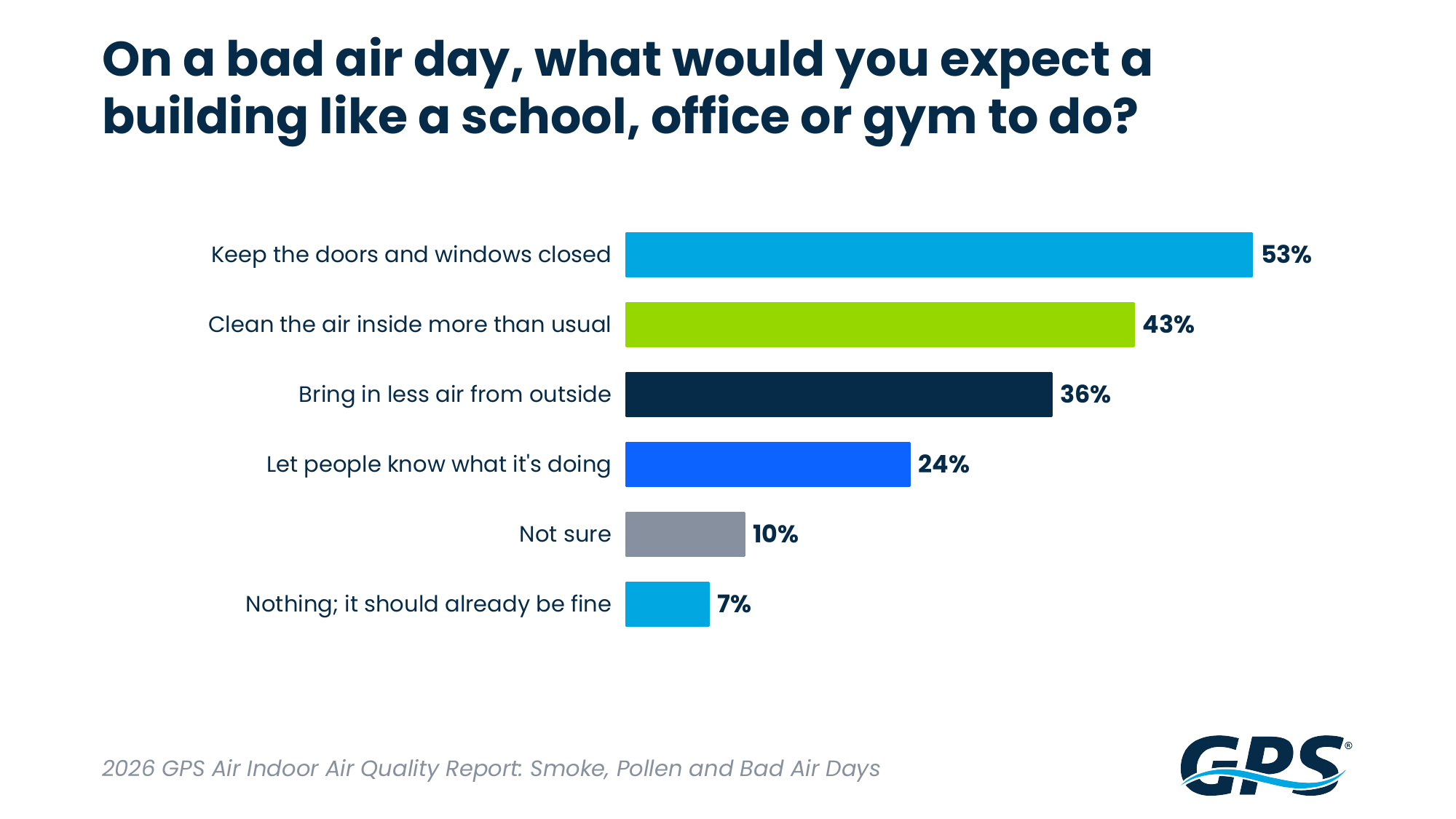
60% of respondents expect buildings to clean the air more than usual or bring in less outside air on bad air days. 53% expect them to keep doors and windows closed, and 24% want buildings to tell people what they're doing. Just 7% say a building should already be fine without changing anything.
Parents' Concerns About Indoor Air Quality in Schools
12%
of K-12 parents are very confident their local schools keep indoor air healthy on bad air days.
Source: 2026 GPS Air Indoor Air Quality Report: Smoke, Pollen and Bad Air Days
61% of respondents say schools are one of the places where clean indoor air matters most on bad air days, ahead of workplaces (45%) and restaurants (40%). Among K-12 parents, 73% put schools on the list, compared with 56% of respondents without a child in K-12.
K-12 parents are also more likely than other respondents to have kept kids or pets inside because of bad air in the past year (47% vs. 20%) and to have noticed problems inside a building on a bad air day (79% vs. 66%).
Only 12% of parents are very confident their local schools keep indoor air healthy on bad air days. 41% are somewhat confident, 33% are not very or not at all confident and 14% have no idea what schools do.
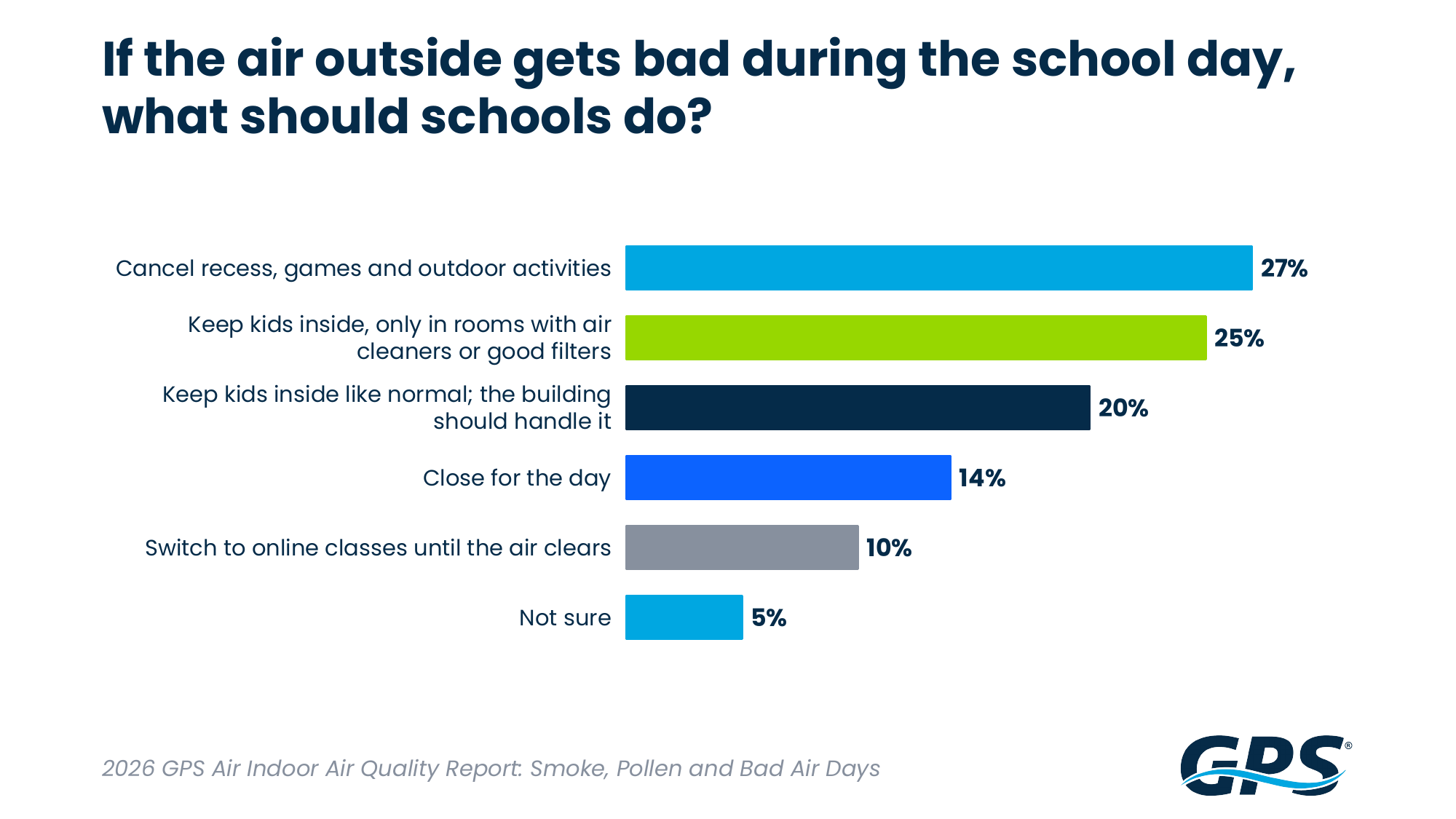
Parents are split on what schools should do when the air turns bad during the school day. 27% would cancel recess and outdoor activities, 25% would keep kids inside only in rooms with air cleaners or good filters and 20% would keep kids inside as normal.
Regional Differences in Indoor Air Quality Perceptions
81%
of respondents in the West have noticed problems inside a building on a bad air day, the highest of any region.
Source: 2026 GPS Air Indoor Air Quality Report: Smoke, Pollen and Bad Air Days
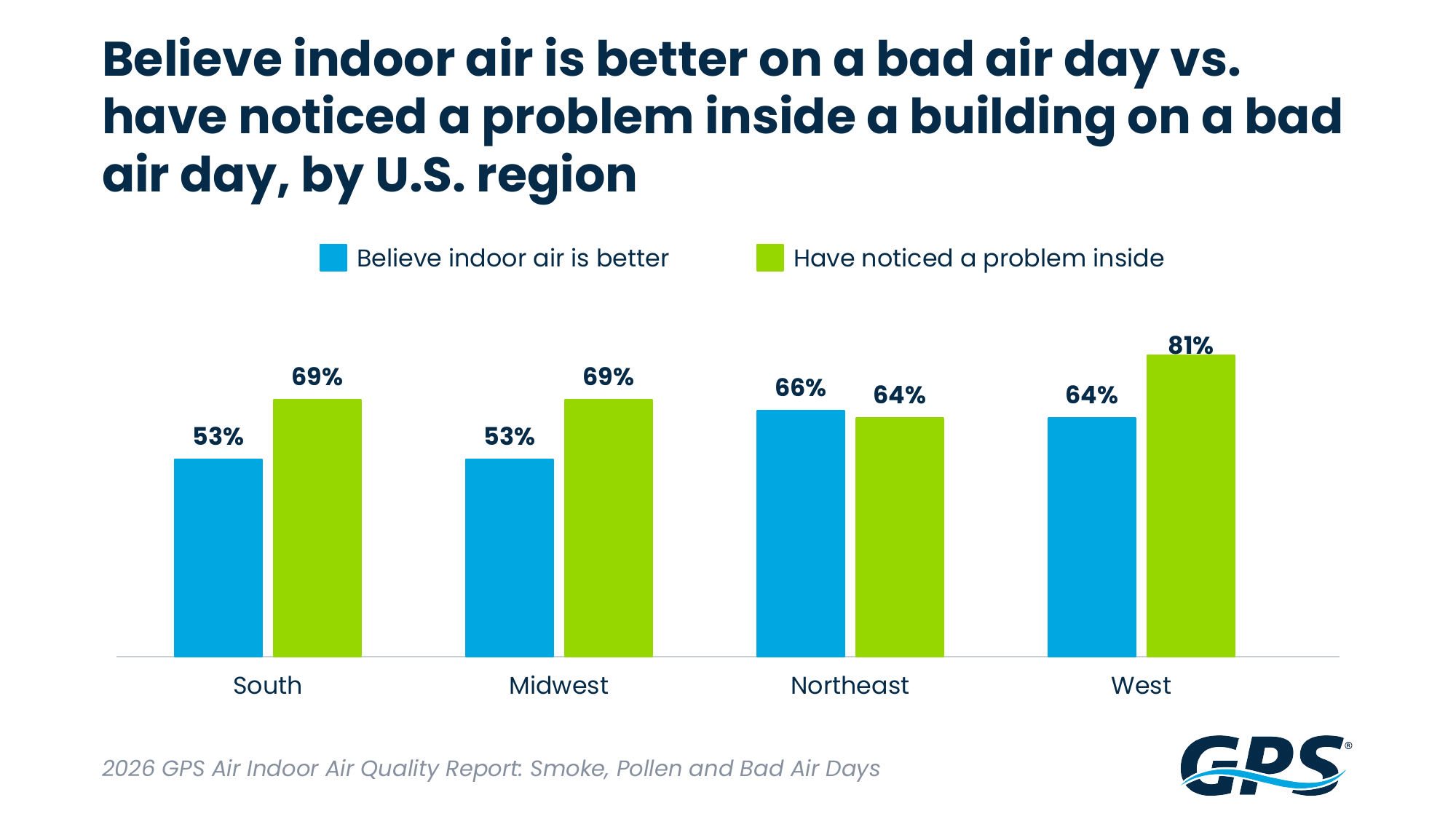
81% of respondents in the West have noticed problems inside a building on a bad air day, the highest of any region. 41% have skipped an indoor place because they weren't sure about the air, and 75% expect buildings to clean the air more or bring in less outside air.
In the Northeast, 66% believe indoor air is better on bad air days, the highest of any region, even though 74% dealt with wildfire smoke or haze in the past year.
In the South, 67% say bad air days have cost them time or money, including 51% who paid a higher electric bill from running the AC.
"People are already changing how they live on bad air days, but going inside by itself doesn't guarantee cleaner air. If the air outside is part of the problem, buildings need to be able to clean the air inside the space and know that it's working. That's especially important in schools, where parents expect the building to provide a healthy place for their kids to spend the day. The opportunity here is to treat indoor air like any other part of building performance: measure it, manage it and communicate to give people confidence that the building is responding when conditions change."
- Audwin Cash, CEO, GPS Air
Frequently Asked Questions About Indoor Air Quality on Bad Air Days
Is indoor air better than outdoor air on bad air quality days?
Not always. 58% of respondents to the 2026 GPS Air Indoor Air Quality Report: Smoke, Pollen and Bad Air Days believe indoor air is better on a bad air day, but 70% have noticed problems inside buildings on those days, such as stuffiness, outside smells or itchy eyes.
How do people respond to poor outdoor air quality?
83% of respondents say the last bad air day changed how they spent their day, and 46% stayed home instead of going out. In the past year, 52% closed their windows and ran the AC and 40% skipped a walk, run or outdoor workout.
Can outdoor air pollution get inside buildings?
Yes. Outdoor pollutants can enter buildings through ventilation systems, doors and windows. 53% of respondents think some outdoor pollution, pollen or smoke gets in through a building's heating and cooling system, and 29% have smelled smoke, exhaust or other outside smells indoors on a bad air day.
Does running the AC clean indoor air?
Air conditioning mainly controls temperature. How much it cleans the air depends on the system and its filter. Only 12% of respondents believe running the AC both cools and cleans the air, while 46% say it depends on the system and filter.
Can buildings clean indoor air instead of relying as much on outdoor air?
Yes. Buildings can use indoor air cleaning technologies to rely less on outdoor air while maintaining appropriate ventilation and air quality. Only 18% of respondents knew this, and 42% said it was new to them.
What do people expect buildings to do when outdoor air quality is poor?
60% of respondents expect buildings to clean indoor air more than usual or bring in less outside air on bad air days. 53% expect buildings to keep doors and windows closed, and 24% want buildings to tell people what they're doing.
What do parents expect schools to do on poor air quality days?
Only 12% of K-12 parents are very confident their local schools keep indoor air healthy on bad air days. When the air turns bad during the school day, 27% say schools should cancel recess and outdoor activities, and 25% say kids should stay inside only in rooms with air cleaners or good filters.
Do people know where to go on bad air days?
Many don't. 19% of respondents aren't sure where they'd go to get out of the house on a bad air day, the most common answer, and 32% have skipped going somewhere indoors because they weren't sure the air inside would be any better.